

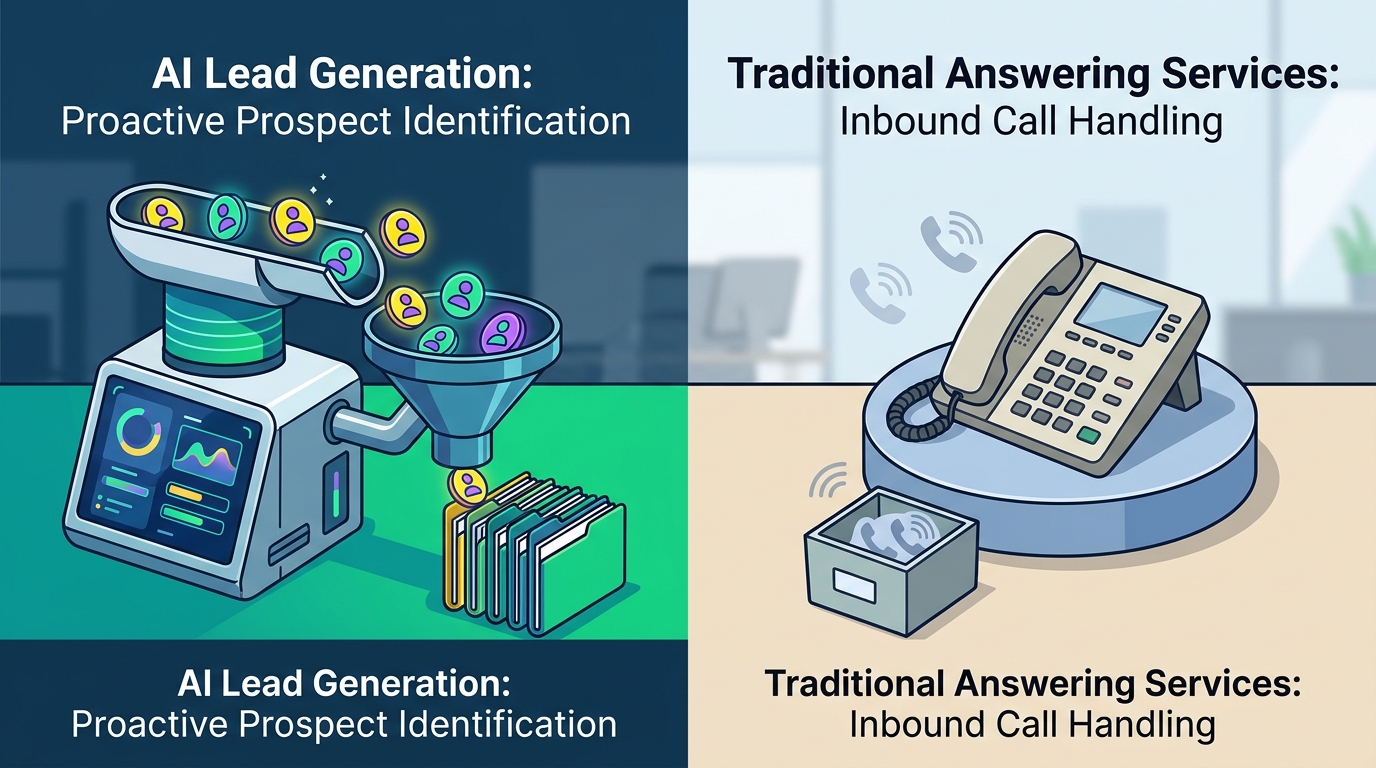
AI lead generation actively identifies and attracts qualified prospects, whereas traditional answering services primarily handle inbound calls. This distinction means AI systems build your pipeline, while answering services manage existing traffic. For service businesses, this difference determines whether you are growing your client base or simply maintaining current operations.
Core Differences in Functionality
Traditional answering services are reactive tools designed to capture missed calls. They answer the phone when a customer calls you, take a message, and schedule an appointment. Their primary function is customer service and retention. In contrast, AI lead generation is a proactive acquisition engine. It identifies potential clients who have not yet contacted you and initiates the conversation. This fundamental shift changes the role of the technology from support to growth. For additional details, review the .
Answering services rely on human operators or basic voice bots to handle inbound inquiries. They do not seek out new customers. AI lead generation systems use data analysis and automated outreach to find prospects. They qualify leads based on specific criteria before passing them to your team. This means the work is done before the human interaction begins. For additional details, review the Customer Experience.
Proactive Outreach vs Reactive Support
The most significant operational difference is among the direction of communication. Answering services wait for the phone to ring. If no one calls, the service does nothing. This creates a dependency on existing marketing channels to drive traffic. AI lead generation flips this model. It actively searches for and contacts potential clients. This allows businesses to fill their pipeline regardless of current inbound volume. For additional details, review the Frequently Asked Questions.
For example, a home service company using an answering service will only see new clients if those clients find the company through Google or word of mouth. An AI lead generation system, like the one built by Aivantoro, can identify homeowners in a specific zip code who recently filed insurance claims. It then reaches out to them with a relevant offer. This proactive approach creates new demand rather than just servicing existing demand. For additional details, review the About.
Cost Structure and Scalability
Scalability is another key factor. Human answering services have limits on how many calls they can handle simultaneously. AI systems can handle thousands of interactions at once. This means you can expand your outreach to new markets without hiring more staff. The marginal cost of adding another lead to the pipeline is significantly lower with AI automation than with human labor.
Data Utilization and Business Intelligence
For instance, an AI system can analyze response rates across different neighborhoods. It can identify which areas have the highest intent for your services. This data allows you to focus your efforts where they are most likely to succeed. Traditional services do not provide this level of strategic insight. They handle the call but do not analyze the market.
Implementation and Integration Considerations
Implementing an answering service is relatively simple. You forward your phone number to the provider. They handle the rest. There is little integration required. AI lead generation requires more setup. It needs access to data sources and integration with your CRM or scheduling tools. This initial effort is necessary to ensure the system works with your existing workflows.
Key Takeaways
- AI lead generation is proactive, while answering services are reactive.
- Answering services manage inbound calls; AI systems create new demand.
- AI systems provide data insights that help refine marketing strategy.
- Cost structures differ, with AI often offering better scalability.
- Implementation of AI systems requires more initial setup than answering services.
- Both tools serve different purposes and can be used together.
Frequently Asked Questions
Can I use both AI lead generation and an answering service?
Yes, many businesses use both. The AI system generates new leads, and the answering service handles inbound calls from those leads or existing customers. This combination ensures you capture all potential clients.
Is AI lead generation more expensive than answering services?
It depends on the pricing model. AI systems may have a higher upfront cost but can be more cost-effective at scale. Answering services charge per call, which can add up quickly with high volume.
Do AI systems replace human customer service?
No, they complement it. AI handles the initial outreach and qualification. Humans handle the complex conversations and closing. This division of labor improves efficiency.
How long does it take to see results from AI lead generation?
Results vary by industry and market. Some businesses see initial responses within days. It takes time to optimize the system and refine the targeting. Patience is required for long-term success.
What kind of data do AI systems use?
They use publicly available data, customer lists, and behavioral signals. They do not use private or restricted data. Compliance with data protection laws is essential.
Is AI lead generation suitable for small businesses?
Yes, it can be very effective for small businesses. It allows them to compete with larger companies by reaching more prospects efficiently. The key is to start with a focused strategy.
Conclusion
Choosing between AI lead generation and traditional answering services depends on your growth goals. If you want to maintain current operations, an answering service is sufficient. If you want to grow your client base, AI lead generation is the better choice. Aivantoro specializes in building AI-powered acquisition engines that help service businesses attract qualified leads and automate follow-up. By leveraging these systems, you can focus on delivering great work while the technology handles the prospecting. To explore how an AI growth engine can fit your business, for a consultation. Learn more: Aivantoro.