

AI answering services are software systems that use artificial intelligence to answer phone calls, qualify leads, and book appointments for home service businesses. For homeowners seeking HVAC, plumbing, or electrical help, these tools ensure no call goes to voicemail. This guide covers how to choose, verify, and implement these systems effectively. For additional details, review the .
How to Choose: What Separates a Good Option from a Bad One
Choosing the right AI answering service requires looking beyond basic call answering. A high-quality system integrates with your existing Customer Relationship Management (CRM) software and dispatch tools. It should not just take a message but qualify the lead by asking about the urgency, location, and specific service needed.
Core Technical Requirements
What to Ask: The Specific Questions to Ask Before Committing
Before signing a contract, you must interrogate the vendor's technical and operational capabilities. Do not accept vague answers about "AI magic." Ask for specific metrics and workflows.
- What is the fallback protocol? If the AI gets confused, does it transfer to a human, or does it hang up?
- How is data stored? Where is the call recording and transcript stored, and who owns that data?
- Can it handle after-hours emergencies? Does it have a specific script for urgent issues like gas leaks or burst pipes?
How to Verify: How to Check That a Claim or Credential is Real
Vendors often claim high accuracy rates or seamless integrations. You must verify these claims independently. Request a live demo using your own business scenarios. Do not watch a pre-recorded video. Speak to the AI yourself and try to confuse it.
Verify integration claims by checking the vendor's public documentation. If they claim to integrate with a specific dispatch software, look for the integration in the software provider's official marketplace. If it is not listed there, the integration may be a fragile, custom build that could break at any time.
How It Works: What Happens, in What Order, and How Long It Takes
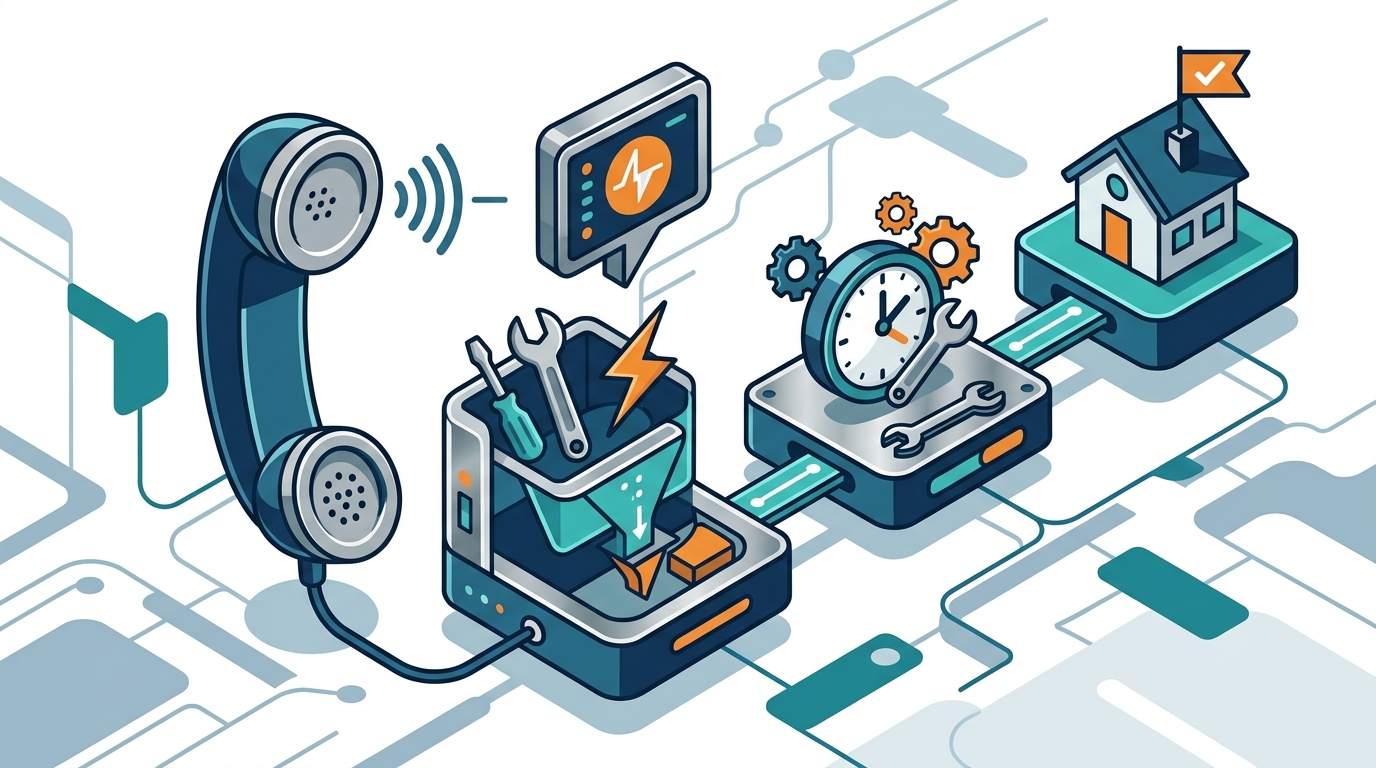
Implementation of an AI answering service typically follows a structured onboarding process. The first step is data ingestion, where the AI learns your business hours, service areas, and common questions. This usually takes 3 to 7 days.
What It Costs: What Drives the Price Up or Down
Pricing for AI answering services varies based on usage and complexity. Most providers charge a monthly subscription fee plus a per-minute rate for active calls. The cost is driven by the volume of calls and the complexity of the logic required.
| Monthly Base Fee | Lower | Medium | Higher |
| Per-Minute Cost | Standard | Reduced | Negotiated |
| CRM Integration | Manual Export | Native API | Custom Build |
Be wary of hidden costs for setup or training. A transparent provider will clearly outline many fees before you sign.
What Goes Wrong: The Common Mistakes and How to Avoid Them
The most common mistake is treating the AI as a set-it-and-forget-it tool. AI models drift over time. If your business changes its service area or adds a new service, the AI must be retrained. Failure to update the system leads to incorrect information being given to customers.
Another error is poor fallback design. If the AI cannot understand a caller, it should transfer to a human or leave a detailed voicemail. If it simply hangs up, you lose the lead. Always test the failure states during onboarding.
Versus Alternatives: How This Compares to the Alternatives
AI answering services compete with human answering services and traditional voicemail. Human services are more expensive and often have slower response times. Voicemail is free but results in low conversion rates because callers rarely leave detailed messages.
For a Specific Situation: How the Answer Changes for a Particular Case
For a solo plumber, a basic AI service that books appointments is sufficient. For a large HVAC company with 20 technicians, you need an AI that can dispatch based on technician location and skill set. The complexity of your dispatch logic dictates the tier of AI service you need.
If you operate in a highly competitive market, the AI must be able to handle objection handling. It should be able to answer questions about pricing and availability without transferring to a human, keeping the caller engaged.
Rules and Protections: The Rules, Rights or Protections that Apply
AI answering services must comply with telecommunications laws. In the United States, the Telephone Consumer Protection Act (TCPA) regulates how businesses can contact consumers. While answering incoming calls is generally safe, using AI to make outbound calls or send SMS messages requires strict consent management.
Consent is the critical protection. Ensure your provider has a clear process for obtaining and documenting consent for any follow-up communications. Failure to comply can result in significant legal penalties.
Local Specifics: What is Specific to the Areas Served
Home service businesses are local. Your AI must understand local geography. It should know the difference between a street name and a city name. It should also be aware of local weather patterns that might affect service availability, such as snowstorms in the Midwest or heatwaves in the South.
Local regulations also vary. Some cities have specific licensing requirements for contractors. Your AI should be able to verify that a job falls within your licensed service area before booking it.
Timing: When to Act and How Timing Changes the Outcome
The best time to implement an AI answering service is before your peak season. If you are in HVAC, implement it in the spring, before the summer heat. This allows you to train the system and fix any bugs before the volume spikes. Implementing during a peak season is risky because any errors will be magnified by high call volume.
Results Over Time: Measurable Outcomes and What to Expect Long Term
Over time, an AI answering service should improve its accuracy. As it processes more calls, it learns the nuances of your customer base. You should track key metrics such as call answer rate, lead qualification rate, and booking conversion rate. A well-implemented system should reduce missed calls to near zero and increase the percentage of qualified leads.
Key Takeaways
- AI answering services are software systems that answer calls and book appointments for home service businesses.
- Integration with your CRM and dispatch software is the most important feature to look for.
- Always verify vendor claims by testing the AI with your own business scenarios.
- Pricing is typically a combination of a monthly fee and a per-minute rate.
- AI is cheaper than human answering services but lacks empathy for distressed customers.
- Compliance with TCPA and consent laws is mandatory for any outbound follow-up.
- Implement the system before your peak season to allow time for training and debugging.
Frequently Asked Questions
What is an AI answering service?
An AI answering service is a software system that uses artificial intelligence to answer phone calls, qualify leads, and book appointments for businesses.
Can AI handle emergency calls?
Yes, but it should be configured to transfer emergency calls to a human immediately. The AI should identify the urgency and escalate the call.
How much does an AI answering service cost?
Costs vary, but most providers charge a monthly subscription fee plus a per-minute rate for active calls. Prices depend on call volume and complexity.
Is AI compliant with TCPA?
Answering incoming calls is generally compliant. However, any outbound calls or SMS messages require strict consent management to comply with TCPA.
How long does it take to set up?
Setup typically takes 3 to 7 days for data ingestion and scripting. A full implementation, including testing, may take 2 to 4 weeks.
Can AI integrate with my existing software?
Conclusion
AI answering services are a critical tool for modern home service businesses. They ensure no lead is missed and streamline the booking process. By choosing a provider with strong integration capabilities and verifying their claims, you can implement a system that drives growth. Aivantoro offers AI-powered acquisition engines that help service businesses attract qualified leads and automate follow-up. To plan your visit, .