

The True Cost of Traditional Front Desk Staffing
Furthermore, traditional hiring requires coverage for all business hours. If a business operates 12 hours a day, five days a week, one employee cannot cover the entire schedule. This necessitates hiring a second or third employee, or paying overtime. Overtime rates are typically 1.5 times the base wage, which further erodes margins. The implication is that a single full-time receptionist is rarely enough to provide seamless, 24/7 coverage without substantial financial strain. For additional details, review the About.
Subscription Models and Predictable Monthly Expenses
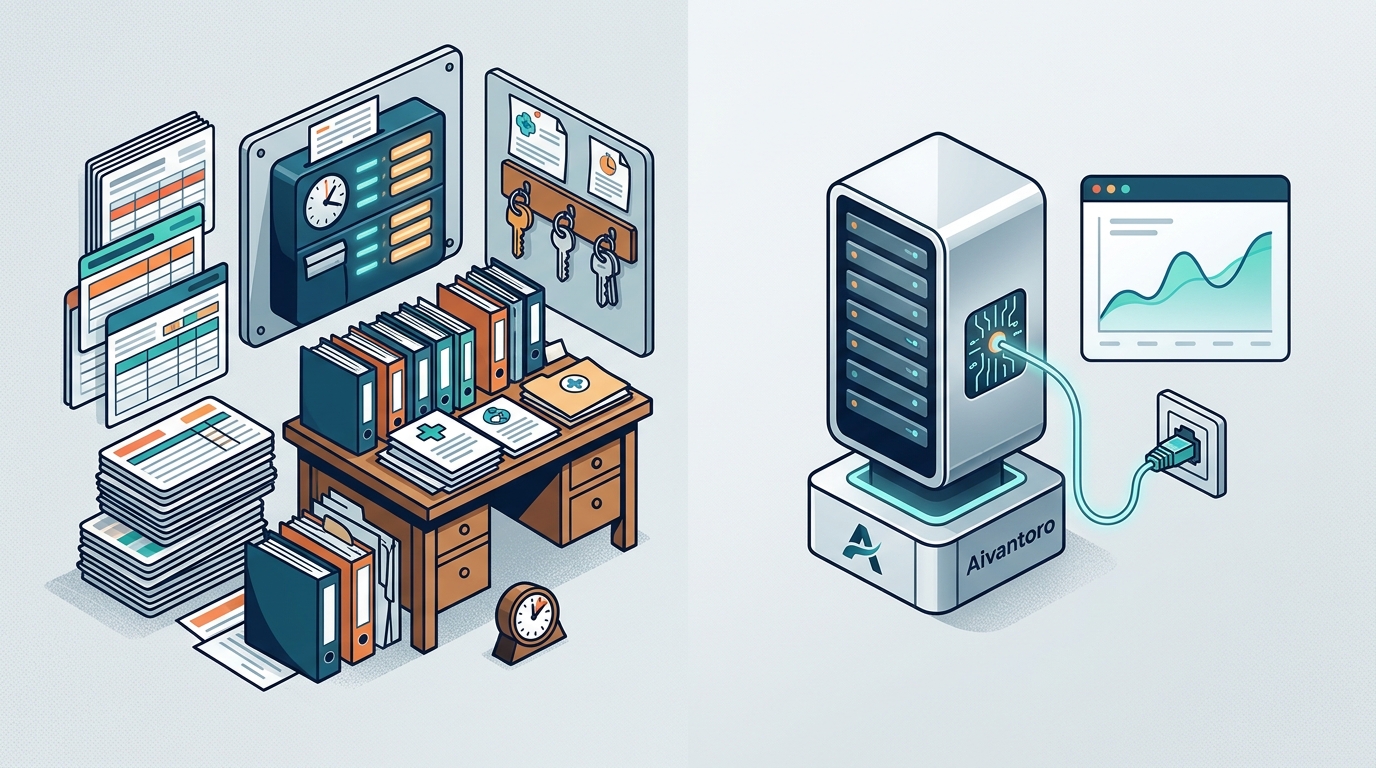
AI receptionists operate on a different financial structure. Software-as-a-Service (SaaS) is a business model where software is delivered over the internet on a subscription basis. Instead of a salary, businesses pay a recurring monthly fee. This fee covers the technology, infrastructure, and maintenance. For most small to mid-sized service businesses, this monthly cost is a fraction of a single employee's monthly payroll.
The predictability of this model is a major financial advantage. There are no payroll taxes, no benefits packages, and no overtime premiums. The cost remains consistent regardless of call volume spikes, provided the plan allows for it. This allows for easier budgeting and cash flow management. Aivantoro integrates these automated systems into broader client acquisition strategies, ensuring that the front line of communication is both cost-effective and always available.
Scalability and Coverage Without Linear Cost Increases
Traditional hiring scales linearly. To double your coverage hours, you must double your headcount. This means doubling the salary, benefits, and management overhead. AI receptionists scale differently. Adding more coverage hours or handling higher call volumes often requires only a tier upgrade in the subscription plan, not a new hire. This non-linear scaling is where the cost difference becomes most pronounced.
Hidden Costs of Human Error and Turnover
Additionally, human error can lead to missed calls, incorrect information, or poor customer experiences. These errors can result in lost revenue and damaged reputation. AI systems do not get tired, do not take sick days, and do not quit without notice. They provide consistent performance and accurate information delivery. While AI requires initial setup and training, the long-term stability often outweighs the recurring costs of human turnover and error correction.
Key Takeaways
- AI receptionists operate on a predictable monthly subscription model.
- Scalability is cheaper with AI; adding hours does not require new hires.
- Turnover and replacement costs are significant hidden expenses in human staffing.
- AI provides 24/7 coverage without overtime premiums.
- Consistency in customer interaction is higher with automated systems.
Frequently Asked Questions
Is an AI receptionist cheaper than a human receptionist?
Generally, yes. The monthly subscription for an AI receptionist is typically lower than the total monthly cost of a human employee, including benefits and taxes. The gap widens when 24/7 coverage is required.
What are the hidden costs of hiring a human receptionist?
Can AI receptionists handle complex inquiries?
Modern AI systems can handle a wide range of inquiries, including scheduling, FAQs, and basic triage. Complex issues can be escalated to human staff, creating a hybrid model that balances cost and capability.
How does Aivantoro help with this decision?
Is there a break-even point for AI vs. human hiring?
The break-even point depends on the number of hours covered and the volume of interactions. For businesses requiring extended hours or high-volume handling, AI often becomes more cost-effective quickly. Learn more: aivantoro com.